When it comes to sparkling wines, France stands out for its remarkable diversity, reflecting the richness of its terroirs and winemaking expertise. Yet it is not always easy to understand what sets these sparkling wines apart. From the refined elegance of Crémants to the distinctive character of Champagnes and sparkling wines without a protected designation, this guide explores the key features of the main families of French sparkling wines.
Crémants: sparkling wines crafted under strict regulations
A renowned appellation produced across several French wine regions
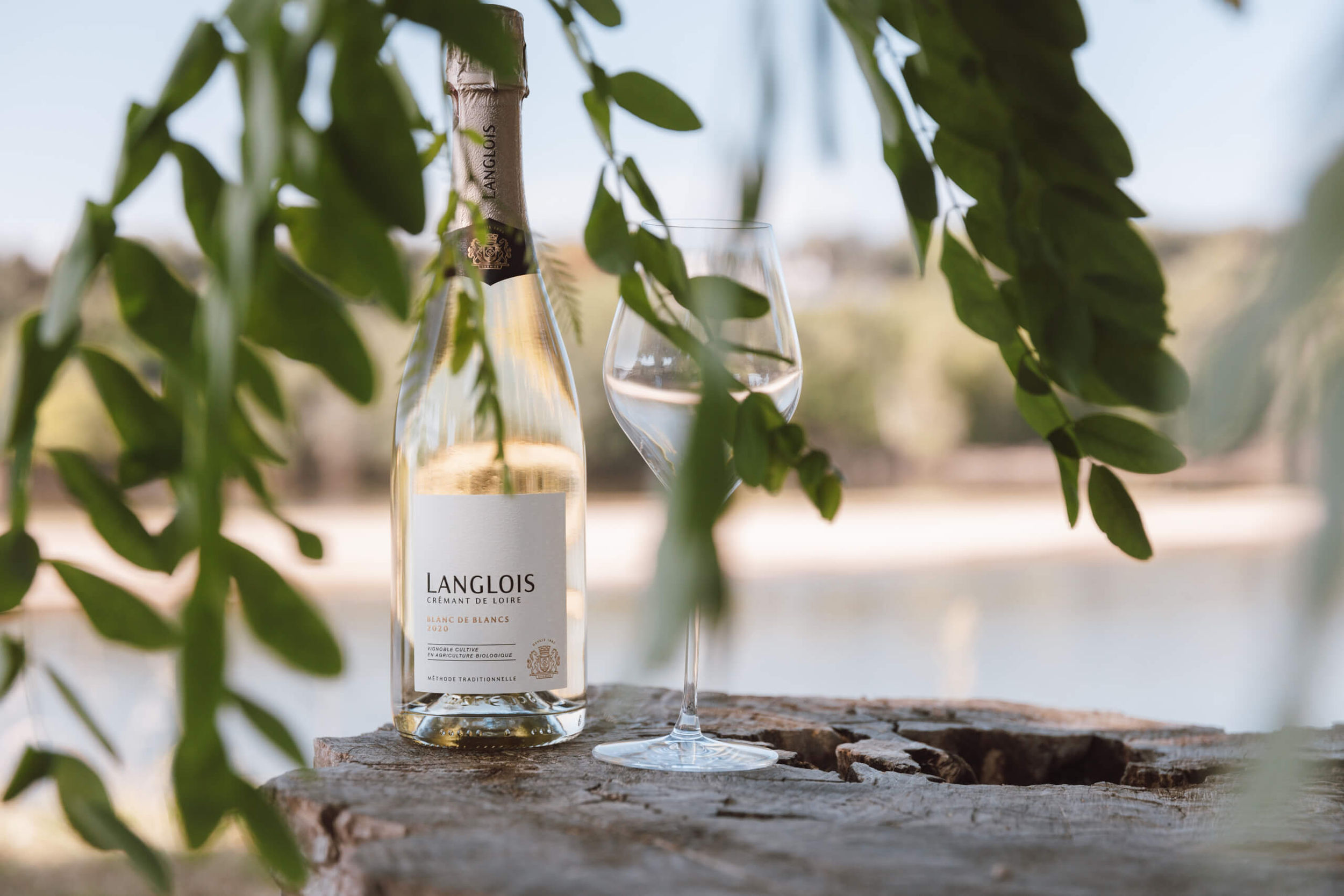
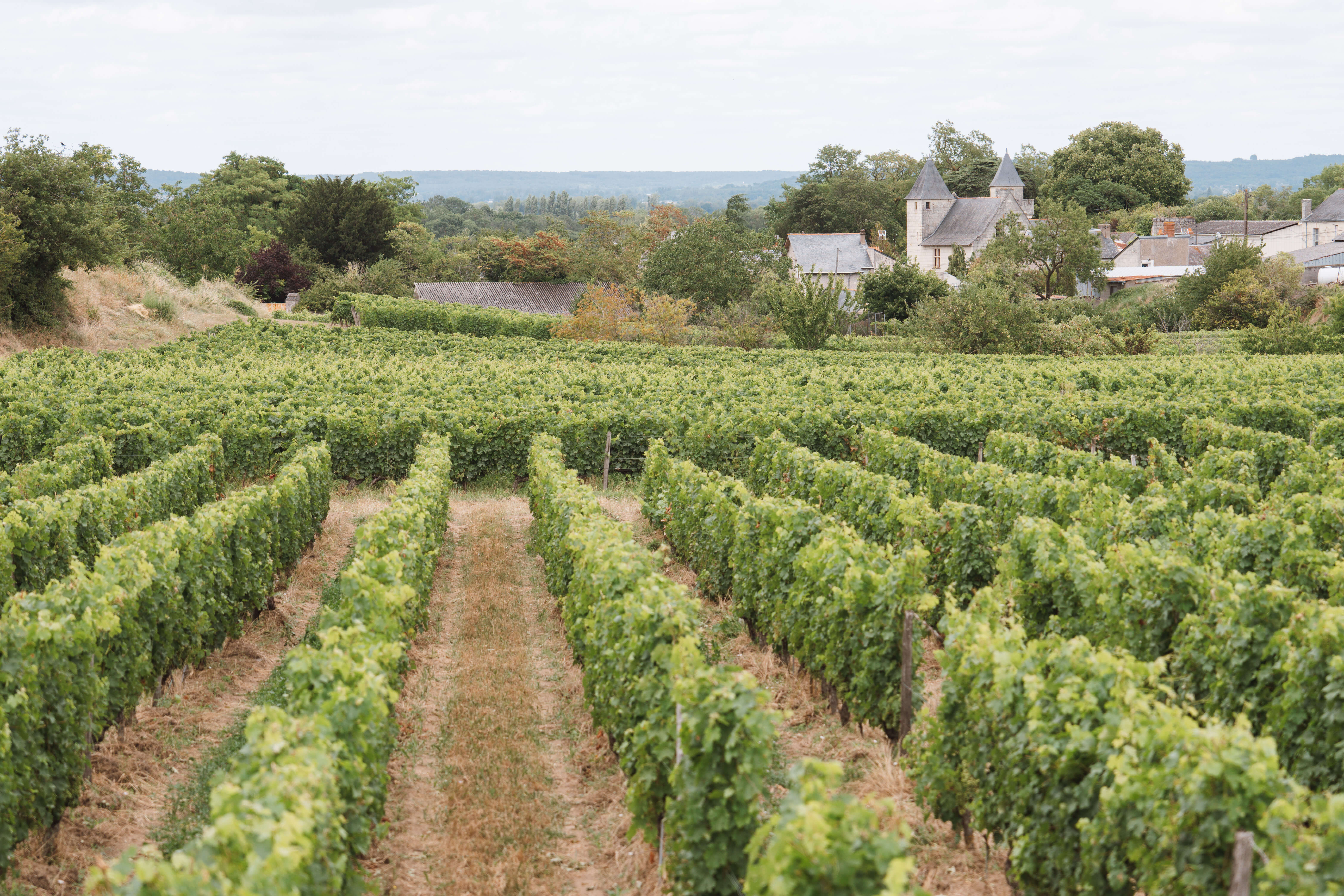
Crémants are undoubtedly among the finest expressions of French sparkling wine. They are produced in eight wine regions across mainland France: the Loire Valley, Alsace, Bordeaux, Burgundy, Die, Jura, Limoux and Savoie. Among them, Crémant de Loire holds a special place thanks to several unique advantages: a mild temperate climate, the beneficial influence of the Loire River—the last wild river in Europe—a remarkable diversity of soils and a rich range of grape varieties. These sparkling Loire wines are distinguished by their subtle balance of freshness, minerality and aromatic depth, as exemplified by Langlois Crémants.
A demanding traditional method
All Crémants are produced under a Protected Designation of Origin (PDO/AOP), meaning they must comply with strict production regulations. For example, Crémant de Loire can only be made within the Loire vineyards, and the grapes must be harvested exclusively by hand. Every Crémant is crafted using the traditional method, ensuring fine, persistent bubbles. This process includes a second fermentation in the bottle, where the sparkle develops naturally, followed by several months of ageing on the lees. Although these regulations vary slightly between the eight production regions, each appellation has its own specific requirements. Crémant de Loire, for instance, authorises grape varieties such as Chenin Blanc, Chardonnay, Cabernet Franc, Pinot Noir and Grolleau. In Saumur, Maison Langlois goes beyond these standards to craft Crémants of exceptional freshness, elegance and complexity.
Champagne: the world’s most famous sparkling wine
An appellation exclusive to a single region
The defining characteristic of Champagne is that it is produced exclusively in the region from which it takes its name. Like Crémants, Champagne benefits from a Protected Designation of Origin (PDO/AOP) and is governed by strict production regulations. The Champagne wine region is divided into four main terroirs: Montagne de Reims, Vallée de la Marne, Côte des Blancs and Côte des Bars. Only three grape varieties dominate these vineyards: Chardonnay, Pinot Noir and Pinot Meunier.
A winemaking tradition with many similarities to Crémant
As with Crémants, Champagne grapes must be harvested entirely by hand. Its sparkle is also created naturally through a second fermentation in the bottle, known as the prise de mousse. The main differences between Champagne and Crémant therefore lie in their respective terroirs and in the specific requirements defined by each appellation. If you would like to explore these distinctions further, read our article on the differences between Crémant and Champagne.
French sparkling wines without an appellation: a diverse category
Less restrictive production methods
Unlike Crémants and Champagnes, sparkling wines without a protected designation are often produced using less demanding techniques, such as the Charmat method. In this process, the second fermentation takes place in a pressurised tank rather than in the bottle. While this method reduces production time and costs, it may result in less refined bubbles and lower aromatic complexity. Other production practices may also differ: grapes can be harvested mechanically, ageing periods are generally shorter, and the concept of terroir is usually less central.
A highly variable level of quality
Without the strict regulations of an appellation, these sparkling wines can vary considerably in quality. Although they are often more affordable, they rarely match the aromatic richness, depth and craftsmanship of PDO sparkling wines such as Crémant de Loire. For this reason, they are often better suited to cocktails, where other ingredients contribute significantly to the overall flavour profile.
The next time you choose a French sparkling wine for an aperitif or a meal, you will have a clearer understanding of the different styles available. To continue exploring the world of sparkling wines, why not discover the differences between Crémant and Prosecco?